A British Wedding Guest's Guide to Earrings: What to Wear by Season
A British wedding can ask you to stand in a cold churchyard at eleven in the morning and dance in a warm marquee at eleven at night, in the same outfit. Earrings are the smallest thing you will wear and often the detail that lifts a dress from nice to finished. Getting them right comes down to reading two things: the season and the room.
Our weather does not follow the calendar neatly, so treat what follows as a starting point, then adjust for the venue, the dress code and how long you plan to stay on the dance floor.
Four Things to Settle Before You Shop
Before you look at a single pair, answer four questions. They narrow the choice faster than any trend list.
- Neckline and hair. Hair up with a bare neck and shoulders? Drops, chandeliers and elongated styles come into their own. Hair loose around the face? Studs and small hoops stay visible. If you are wearing a hat or fascinator, this matters even more: wide brims and long dangles can tangle, so choose studs or a short, close-fitting drop.
- Metal tone. Match — or deliberately contrast with — the hardware on your outfit: buttons, belt buckle, bag clasp, shoe trim. Silver and white gold read cooler and sharper; gold and rose gold read softer and warmer. If your outfit mixes metals, pick the one closest to your face.
- Dress code. Formal, cocktail, smart casual and country casual ask for genuinely different things. Bigger, brighter earrings usually belong to the evening, while daytime ceremonies reward restraint and a polished finish.
- Practicalities. Gravel paths, windy churchyards, small children and long ceremonies all punish heavy or loosely fastened earrings. Think about weight, backs and whether you will be holding a child, a glass or a hymn book.
A useful rule: if you can hear your earrings before you see them, they are probably too big for a daytime ceremony.
Spring: Light Studs and Soft Colour
Spring weddings tend to be bright but cold. Dresses are often in softer fabrics — crepe, chiffon, light satin — and the overall look is fresher than it is glamorous.
Your earrings should follow. Think small freshwater pearls, tiny gemstone studs in aquamarine, pale pink or soft green, slim drops on a fine chain and delicate hoops no wider than a couple of centimetres. White gold and silver feel right in daylight; rose gold suits a warm-toned outfit. For example, a pale blue crepe dress with silver hardware looks lovely with aquamarine studs, while a blush pink chiffon dress warms up beautifully with tiny rose-gold hoops.
Spring evenings
If the reception runs on, you can push the scale up slightly — a longer drop, a little more sparkle — but keep the shape simple. Very ornate chandeliers in a bright country venue can look as though you have arrived from a different event.
A note for April and May: churches are cold. Earrings that sit close to the lobe sit comfortably under a pashmina or tailored jacket, while long dangles catch on wool.
Summer: Keep It Light and Secure
Warm weather changes the physics of dressing. Heavy earrings feel heavier, hair goes up, and you are far more likely to be outside.
Small to medium gold hoops are the workhorse of a summer wedding — they suit almost every neckline and survive a warm car journey. Fine drops work too. For a garden party, brushed gold hoops with a cotton dress look effortless; for a seaside or coastal venue, turquoise, coral or lemon quartz studs add a holiday note without shouting. Avoid long, swinging styles if there is any chance of wind. Two small habits save trouble: apply sunscreen and hairspray before you put your earrings on, and wipe them with a soft dry cloth when you take them off. Perfume and lotions can dull metal and cloud pearls over time.
Marquees and evening receptions
Once the sun drops, summer evenings become an easy excuse for a statement. A bold hoop, a sculptural drop or a single coloured stone will carry a simple dress. If you go bold on the ears, keep the neckline bare or nearly bare.
Autumn: Warm Metals and Berry Tones
Autumn is the most forgiving season for jewellery and the most rewarding. Fabric gets heavier, colours get deeper, and gold suddenly looks like the right answer.
Look for warm metals — yellow gold, bronze-toned finishes, oxidised brass — and stones in garnet, amber, smoky quartz or deep plum. Cluster studs echo the season without being literal; leaf and vine motifs suit country venues. Velvet, tweed, wool crepe and dark floral prints all take richer earrings well. A burgundy velvet dress with gold cluster studs, for instance, needs nothing else at the neck.
If you are wearing a high neckline or a roll-neck under a dress, the earrings do most of the work. Keep them a size larger than you would in spring.
Winter: Pearls, Velvet and a Little Sparkle
Winter weddings have the best lighting: candlelight, fairy lights, dark afternoons. That light favours pearls and faceted stones, which catch and throw back whatever is in the room.
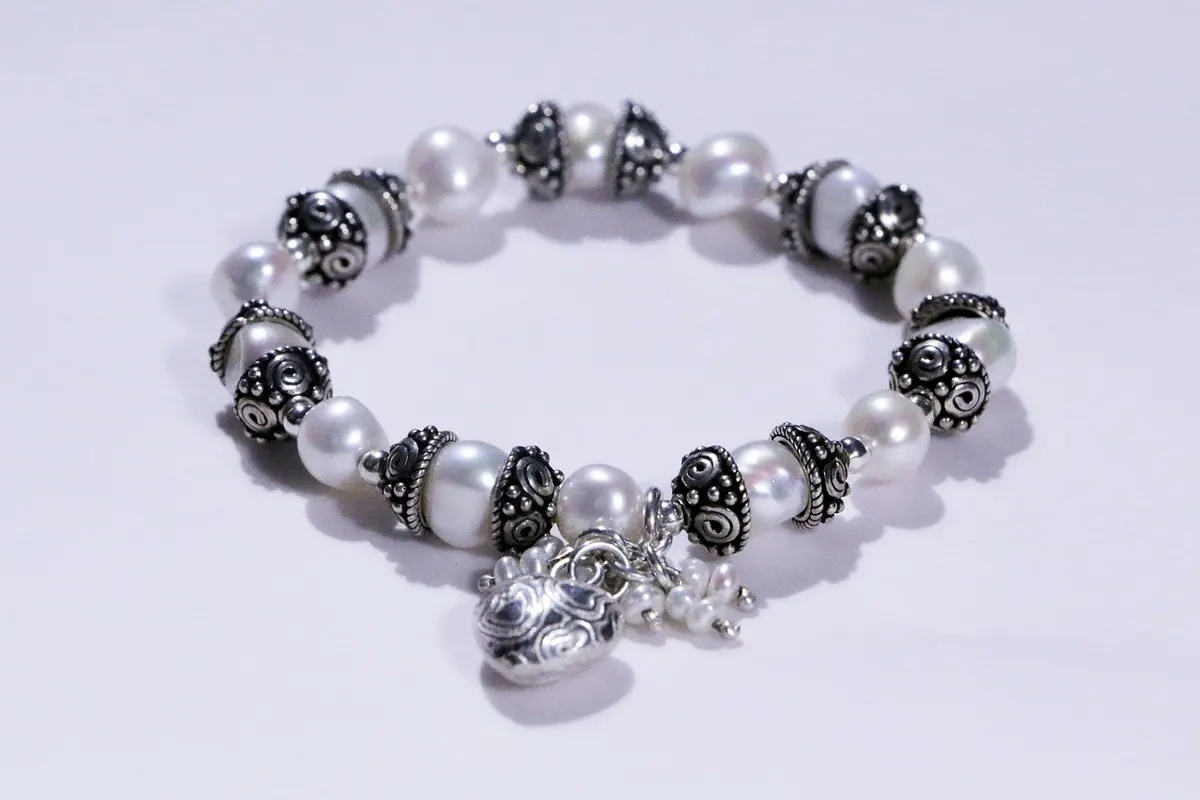
Pearls are the obvious choice and still the best one: freshwater or cultured pearl drops, pearl studs with a small stone accent, or a pearl hoop. Pair them with navy, burgundy, forest green or winter white. If you are wearing a wrap or a faux-fur stole, keep the earrings polished and simple so they do not compete with texture.
Sparkle is welcome too. Crystal or cubic zirconia chandeliers, clusters and slim drops are all fair game — just pick one focal point. If the dress is beaded, keep the earrings to a single clean line; if the dress is plain, you can afford more shine.
A Quick Season-by-Season Cheat Sheet
- Spring: Pearl studs, aquamarine drops, slim gold hoops. Keep sparkle low and shapes delicate.
- Summer: Gold hoops, fine drops, coloured studs. Light weight and secure backs are essential.
- Autumn: Gold clusters, garnet or amber drops, bronze finishes. Slightly larger than spring, warmer than summer.
- Winter: Pearls, crystal drops, diamond-style studs. One focal point, polished finish, maximum reflected light.
Comfort, Security and the Long Day
British weddings are long. Ceremony, drinks, meal, speeches, dancing and possibly a late-night bacon roll. Earrings that felt fine at 2pm can feel like small anchors by 9pm. Look for properly finished posts, secure backs and a weight you can genuinely forget about.
- Weight: If an earring pulls the lobe downwards, it will only get worse. Choose a lighter pair or use a discreet support patch behind the lobe.
- Backs: Butterfly backs are fine for studs, but heavier drops benefit from silicone backs or locking backs. They are cheap, invisible and save you from searching the dance floor on your hands and knees.
- Spares: If your ears close quickly, pack a spare pair of small studs in your bag. They take up no room and can rescue an outfit if a clasp fails.
The Five-Minute Final Check
- Turn your head side to side and tilt it down. Do the earrings stay put and feel comfortable?
- Check them in daylight and in artificial light. Pearls and crystals can look very different under both.
- Try your hair up and down. If you plan to change your hairstyle between ceremony and reception, make sure the earrings work for both.
- Put on your hat, fascinator or wrap. If anything catches, tangles or hides the earrings completely, rethink the pairing.
- Ask one honest question: do the earrings finish the outfit, or are they fighting it? If you notice the earrings before the face, they are probably doing too much.
Get those details right and your earrings will do their quiet job: making you look considered, comfortable and ready for whatever a British wedding day decides to throw at you.
Photo: BR1 FDS / Pexels