Gemstone jewellery earns its wear. A ring worn daily collects hand cream, soap residue, hairspray and the fine grey film that makes even a well-cut stone look sleepy. Most pieces can be brought back to life at the kitchen sink in five minutes — the skill is knowing which stones tolerate water, and which will never quite forgive you for it.
Why gemstones react differently to water and heat
Two things determine what a stone can handle: the material itself and whatever treatment has been applied to it. Hardness on the Mohs scale tells you about scratch resistance, not toughness — a diamond is the hardest natural mineral, yet it can chip along a cleavage plane if knocked in the wrong place. An opal is comparatively soft and contains water within its structure, which is why sudden temperature changes can craze it.
Then there is porosity and treatment. Turquoise is porous and often waxed or resin-stabilised. Emerald is usually oiled or filled to disguise fractures, and soaking it can draw that filler out. Pearls, coral and amber are organic, so they dislike chemicals, heat and prolonged soaking. A stone's identity matters as much as its setting, and if you are not certain what you own, treat it as delicate until someone qualified tells you otherwise.
The safe basics: what you need
You do not need a gadget drawer. A small kit covers most jobs:
- A soft baby toothbrush with gentle bristles
- Lukewarm water and a drop or two of mild, unscented washing-up liquid — nothing with lemon, bleach or "antibacterial" additives
- Two small bowls, one for washing and one for rinsing
- A lint-free cloth or microfibre cloth for drying, plus a soft polishing cloth for metal
- A cocktail stick or soft brush for reaching behind settings
Work over a bowl rather than directly over the sink, and put the plug in regardless. Earring backs, tiny screws and loose stones disappear down plugholes with remarkable speed. Then follow the same sequence every time:
- Sit the piece in lukewarm soapy water for a minute or two — for durable stones and metal only.
- Brush gently, working under the setting and around the girdle where grime collects.
- Rinse in a second bowl of clean lukewarm water rather than under a running tap.
- Pat dry with a lint-free cloth.
Leave the piece to air-dry completely before wearing or storing it. Moisture trapped against a setting encourages tarnish and can loosen glued fittings over time.
Matching the method to the stone
Durable stones
Diamond, sapphire, ruby, spinel, garnet, quartz family stones such as amethyst and citrine, and most other hard gems cope well with the bowl-and-brush method above. Use warm rather than hot water, keep the soap mild, and dry thoroughly.
Porous, soft and organic stones
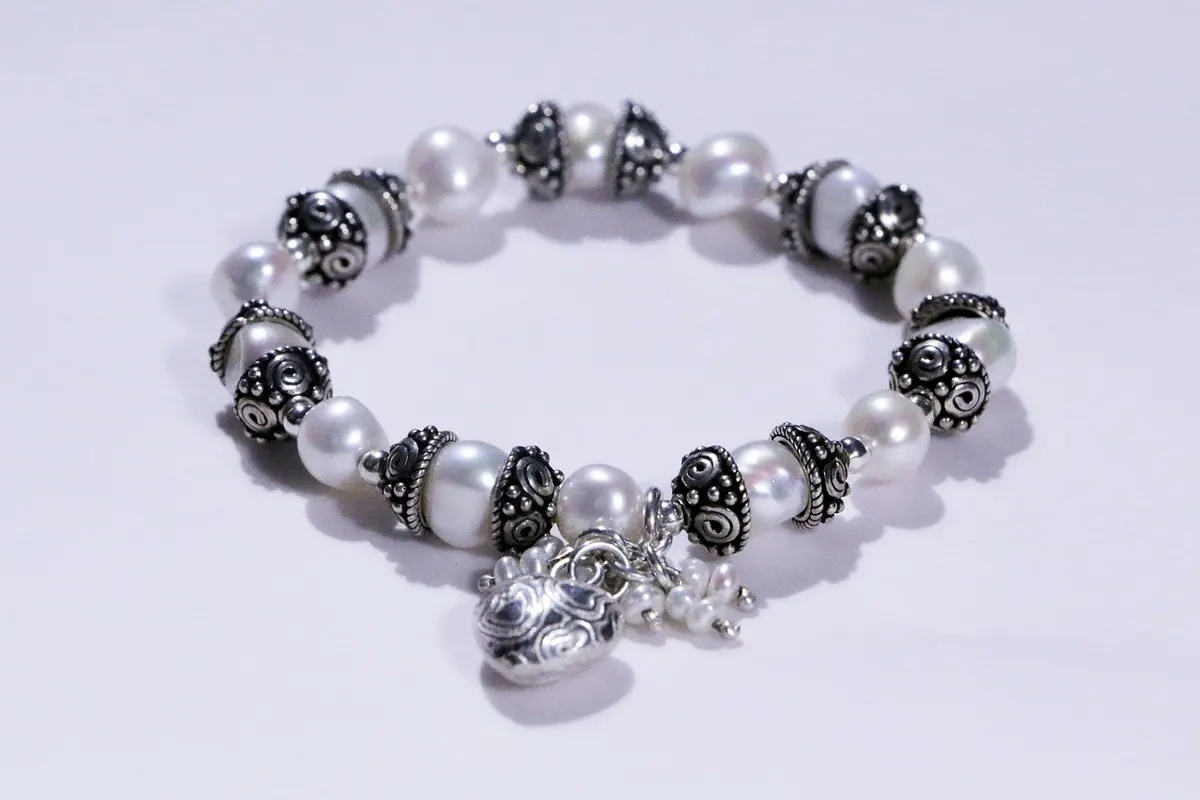
Opal, turquoise, pearl, coral, amber, malachite, lapis lazuli, moonstone and tanzanite need a different approach. Skip the soak entirely. Wipe them with a barely damp cloth — dampened with plain water, not soap — then dry immediately with a soft cloth. Pearl strands in particular should be wiped after wearing rather than immersed, and left to dry flat on a towel.
Emeralds and treated stones
An emerald is hard in theory but almost always fractured in practice, and frequently oiled. Clean it with a soft damp cloth, or a very brief, gentle brush in mild soapy water, and never soak it. The same caution applies to anything fracture-filled, dyed or coated. Commercial jewellery cleaners are worth avoiding unless the label explicitly confirms they are suitable for your specific stone.
When in doubt, use less water, less soap and less time.
What to avoid
Most jewellery damage happens through good intentions. Keep these away from gemstone pieces:
- Ultrasonic and steam cleaners — excellent for some solid diamonds, disastrous for emeralds, opals, pearls, porous stones and anything glued or treated. Use only if a jeweller has confirmed it is safe for that exact piece.
- Bleach, vinegar, lemon juice and baking soda — all can etch metal, dull a polish or attack a porous stone.
- Silver dip and tarnish removers — the acids strip more than tarnish and damage many gemstones on contact.
- Toothpaste — abrasive enough to dull a facet edge.
- Hot water — harmful to opals and to any setting held with adhesive.
- Firm or worn toothbrushes, wire brushes and paper towels — wood fibres in kitchen roll will fine-scratch metal and softer stones.
- Household appliances — no dishwasher, no washing machine, no hairdryer on a hot setting.
One more: take rings off before applying hand cream, sunscreen or hand sanitiser. The residue builds up behind stones and is one of the most common reasons a ring looks cloudy.
Settings, chains and bead strands
Gemstones sit in metal, and the metal needs attention too. Gold and platinum can be cleaned in the same mild soapy water as hard stones. Silver responds well to a soft silver-polishing cloth, but keep that cloth away from gemstones — the polish residue is abrasive. Rhodium-plated white gold dulls over time and cannot be restored at home; a jeweller can re-plate it.
For necklaces and bracelets, avoid soaking the full length, especially where the cord, silk thread or leather is involved. Clean the gemstone or clasp with a damp cloth and let the strand dry flat, away from direct heat. String can stretch and rot quietly, so if a strand is worn often it is worth having it re-strung periodically. Check clasps, jump rings and prongs with your eyes rather than your fingers — a loose prong feels tight until the stone is gone.
When to stop and see a professional
Some jobs are not kitchen jobs. Book an appointment if a stone is loose, rattling or sitting unevenly; if there is a chip, crack or visible change in colour; if grime sits in a place your brush cannot safely reach; or if the piece is antique, heirloom or of uncertain material. Restoring a scratch properly means re-polishing a facet, and that is skilled work.
It is also worth asking a jeweller to clean and check a frequently worn piece once a year, and to ask whether that is included when you are having something repaired. A quick professional inspection can catch a failing claw before it costs you a stone.
A simple routine that keeps pieces looking their best
Jewellery stays cleaner when cleaning is incidental rather than a task. Put pieces on last when dressing and take them off first at night. Wipe each one with a soft cloth after wearing. Store items separately in soft pouches or a lined box so harder stones cannot scratch softer neighbours — diamond against opal is a losing combination for the opal. Keep a designated small bowl and baby toothbrush under the sink for quick, confident cleans, and let anything uncertain go to a professional instead of a DIY experiment. Handled that way, a favourite ring or pendant can look sharp for decades.
Photo: jarmoluk / Pixabay