Buying a ring should feel exciting, not like a guess. Yet finger size changes with temperature, time of day and even how much water you have drunk. A ring that slips off in winter may feel tight in summer. The good news is that you can get a reliable starting point at home with a strip of paper, a piece of string and a ruler. This guide walks you through measuring your finger, matching the result to UK ring sizes and avoiding the mistakes that lead to a ring which spins, pinches or refuses to pass the knuckle. Whether you are planning a surprise engagement, ordering a wedding band online or replacing a much-loved ring that slipped off in the sea, a few quiet minutes with a ruler will save you weeks of returns, resizing fees and disappointment.
Before You Measure: Timing, Tools and a Little Patience
Measure late in the afternoon or evening, when fingers tend to be at their largest. Cold hands shrink, so warm them up first if you have just come in from a winter walk. Avoid measuring straight after a hot bath or a long swim, too; extreme temperatures can skew the result.
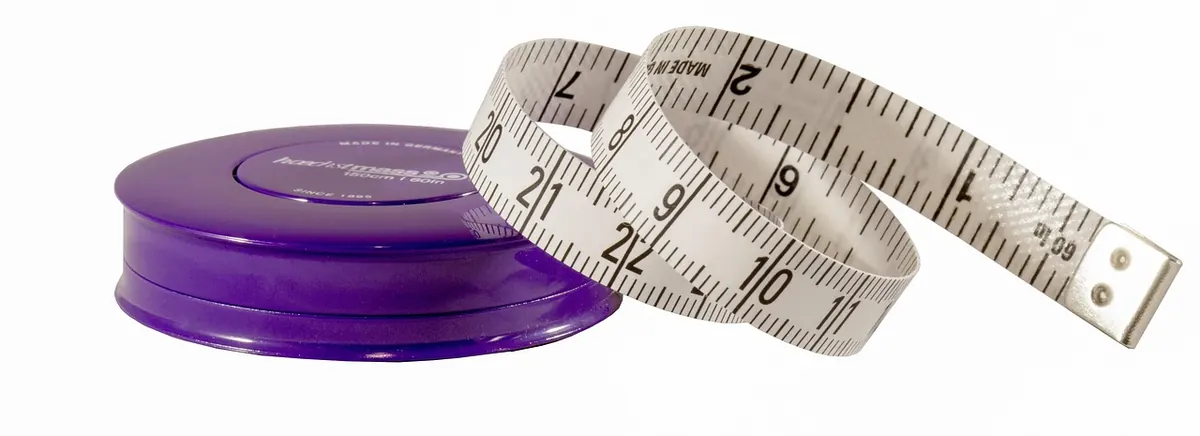
You will need a thin strip of paper about a centimetre wide, or a piece of string that does not stretch. A pen and a ruler marked in millimetres are essential. If you are measuring for someone else, borrow a ring they already wear on the correct finger rather than guessing from glove size — glove sizes are notoriously unreliable and vary enormously between brands.
Give yourself a few minutes. Do not rush the measurement, and do not measure only once. Take three readings at different times of day if you can, then use the largest. A ring is far easier to resize down than up, and knuckles only get bigger with age.
How to Measure Your Finger Step by Step
- Wrap the paper strip or string around the base of the finger you intend to wear the ring on. The base means just below the knuckle, where the ring will actually sit.
- Pull it snug — tight enough that it will not slip off, but loose enough that you can still slide it over the knuckle without force. You are looking for the smallest comfortable fit.
- Mark the exact point where the end of the strip meets the rest of the paper, using a pen.
- Lay the strip flat against a ruler and measure the distance from the start of the strip to your mark, in millimetres. This is your finger circumference.
- Repeat the process on the same finger two more times, then take the average. If your three readings vary by more than a millimetre, slow down and try again.
- If the finger has a large knuckle, measure the widest part of the knuckle as well and choose a size that clears it. A ring that will not pass the knuckle is useless, however well it fits the base.
Tip: measure the finger on your dominant hand separately. Most people find that their two hands differ by up to half a ring size, and no amount of willpower will change that.
Matching Your Measurement to UK Ring Sizes
Unlike much of Europe, which uses a simple numeric scale, the UK uses an alphabetical system running from A (the smallest common adult size) all the way to Z, with half sizes in between, written as D½ or P½. The letters are based on the internal circumference of the ring, so your paper measurement translates fairly directly.
Compare your measurement to the list below. These figures are a guide and can vary slightly between jewellers, so always check the specific sizing chart of the shop you are buying from.
- A — 37.8 mm circumference (12.0 mm diameter)
- C — 40.4 mm (12.9 mm)
- E — 42.9 mm (13.7 mm)
- G — 45.5 mm (14.5 mm)
- I — 48.0 mm (15.3 mm)
- J — 49.3 mm (15.7 mm)
- K — 50.6 mm (16.1 mm)
- L — 51.9 mm (16.5 mm) — a very common women's size
- M — 53.1 mm (16.9 mm)
- N — 54.4 mm (17.3 mm)
- O — 55.7 mm (17.7 mm)
- P — 57.0 mm (18.1 mm)
- Q — 58.3 mm (18.6 mm)
- R — 59.5 mm (18.9 mm)
- S — 60.8 mm (19.4 mm)
- T — 62.1 mm (19.8 mm)
- U — 63.4 mm (20.2 mm)
- V — 64.6 mm (20.6 mm)
- W — 65.9 mm (21.0 mm)
- X — 67.2 mm (21.4 mm)
- Y — 68.5 mm (21.8 mm)
- Z — 69.7 mm (22.2 mm)
If your measurement falls between two entries — say 52.5 mm — you are between an L and an M. Half sizes exist precisely for this, and most jewellers will happily order them.
Measuring a Ring You Already Own
If you already have a ring that fits the right finger perfectly, this is the most accurate method of all. It removes the guesswork about knuckles, temperature and how tightly you pull the paper.
- Take the ring and place it on a flat surface.
- Measure the internal diameter — the distance across the inside of the band, not the outside, and not including the metal itself.
- Multiply that diameter in millimetres by 3.14 (pi) to find the internal circumference.
- Match the circumference to the chart above.
For example, a ring with an internal diameter of 16.5 mm has a circumference of roughly 51.8 mm, which makes it a size L. Be careful with thick or domed bands, which sit differently on the finger than slim ones, and never measure a ring that is already misshapen — the metal will have moved and your reading will be wrong.
Common Mistakes That Lead to the Wrong Size
- Measuring the wrong finger. Sounds obvious, but it is the single most common error, especially when a partner is measuring in secret.
- Using a stretchy string. Elastic cord stretches as you pull, giving you an inflated circumference and a ring that falls off.
- Measuring in the morning. Fingers are typically at their smallest first thing, when you are cool and rested.
- Ignoring band width. A wide band (6 mm or more) covers more of the finger and needs roughly half a size larger than a slim one.
- Forgetting the knuckle. If the ring must pass over a prominent knuckle, size for the knuckle, not the base of the finger.
- Trusting a ring that no longer fits. If the ring you are copying has been stretched or resized before, its dimensions may already be unreliable.
- Ordering before checking. Every jeweller's chart is slightly different. Always confirm against the chart for the specific shop and metal.
What to Do If You Fall Between Two Sizes
When in doubt, go up rather than down — provided the ring still clears your knuckle comfortably. A slightly loose ring can be built up with sizing beads, worn with a thin stacking band or resized down later. A ring that is too tight may not fit at all, and constant pressure on the finger is uncomfortable, can restrict circulation and in the long term can damage the ring itself. The one exception is a very wide band or a heavy ring that tends to spin; in that case, a snugger fit is usually more pleasant.
When to See a Jeweller
Home measurement is excellent for a starting point, but it has limits. Book a professional sizing if you are commissioning an expensive piece, choosing a metal that is difficult to resize (titanium and tungsten cannot be resized at all), or buying for someone whose finger you cannot access. Most jewellers will size you for free, often with a set of metal ring gauges that are far more accurate than paper.
Finally, remember that fingers change. Weight fluctuations, pregnancy, arthritis and simply getting older can shift your size by half or even a full letter over a few years. It is worth re-measuring before every significant purchase, rather than assuming the size you wore at twenty-two will still be right at forty.
A well-fitting ring is one you forget you are wearing. Take your time, measure more than once, and when you finally slide that ring onto your finger, the only thing you will feel is excitement.
Photo: Johanna84 / Pixabay