Birthstones by Month: A Beginner's Guide to Meaning and Colour
A month-by-month guide to birthstones, covering the colour, traditional meaning and durability of each stone.
Birthstones are one of the few pieces of jewellery lore that nearly everybody knows — and almost nobody can list in full. Ask someone what their birthstone is and you will usually get a confident answer for their own month and a shrug for the other eleven. That is a shame, because the full list is a compact tour through gemmology: soft, romantic pearls sit beside diamonds, and affordable everyday stones like amethyst sit alongside genuine rarities like alexandrite.
This guide covers all twelve months, with the colour you can expect, the meaning traditionally attached to each stone and — just as importantly — how well it will survive being worn. If you are buying a gift, that last point matters more than any legend.
Where Birthstones Come From
The idea of tying a gemstone to a month is older than the modern list. The breastplate of the Jewish high priest, described in the Book of Exodus, is set with twelve stones, and later writers linked those stones to the twelve tribes, the twelve apostles and the signs of the zodiac. In the first century, the historian Josephus suggested a connection between the twelve stones and the twelve months of the year.
The list most jewellers use today is much newer. It was standardised in 1912 by the American National Association of Jewelers (now Jewelers of America), which also added stones for months that had none. That is why some months have a "modern" stone and an older "traditional" one — and why June, October and December each offer more than one option.
The list is convention, not chemistry. Treat it as a starting point, not a rule about what you are allowed to wear.
Birthstones by Month
January: Garnet
Garnet is best known as a deep, wine-red stone, though it also occurs in orange, pink, purple and a vivid green variety called tsavorite. Long associated with protection, friendship and safe travel, it was carried by travellers as a talisman. At 6.5 to 7.5 on the Mohs scale it is reasonably hard, which makes it a practical choice for rings and bracelets.
February: Amethyst
Amethyst is purple quartz, ranging from pale lilac to a deep, saturated violet. The ancient Greeks believed it prevented drunkenness and kept the wearer clear-headed; today it is linked with calm, clarity and balance. It is abundant and affordable, and at Mohs 7 it stands up well to daily wear.
March: Aquamarine and Bloodstone
Aquamarine, the modern stone, is a pale blue to blue-green beryl — the colour of shallow sea water. Sailors carried it for courage and calm seas. The traditional stone, bloodstone (a green chalcedony flecked with red), was valued for vitality and protection. Aquamarine sits at 7.5 to 8 and bloodstone around 6.5 to 7, so both can handle everyday wear.
April: Diamond and Rock Crystal
Diamond is the hardest natural material known, a 10 on the Mohs scale, and its name comes from the Greek adamas, meaning invincible. It has long symbolised eternal love and strength. The traditional alternative, rock crystal, is clear quartz — pretty and inexpensive, though plainer than the stone it replaced.
May: Emerald and Chrysoprase
Emerald is the green variety of beryl, prized for a colour associated with rebirth, love and wisdom. It rates 7.5 to 8 for hardness but usually contains internal fractures, so it chips more easily than that number suggests; emeralds are happiest in earrings, necklaces or a protective bezel setting. Chrysoprase, the traditional stone, is an apple-green chalcedony.
June: Pearl, Moonstone and Alexandrite
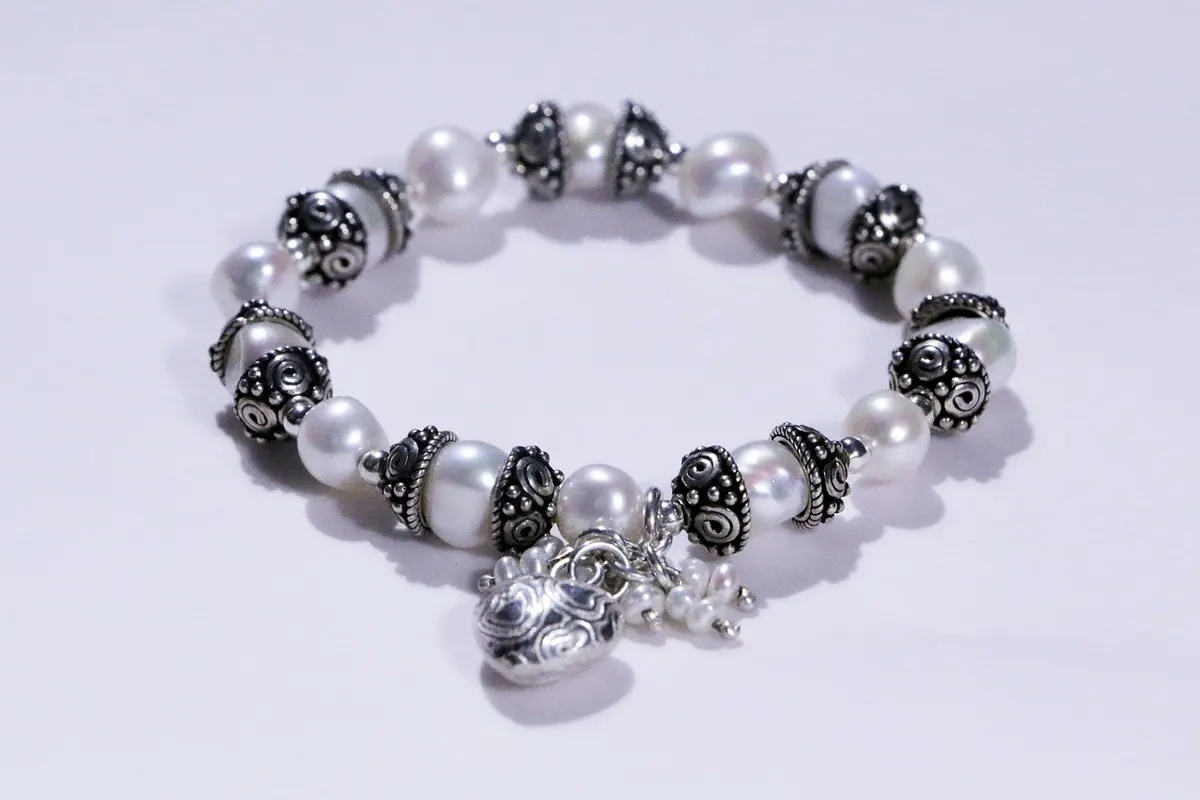
June offers the most choices. Pearl — organic, lustrous and traditionally a symbol of purity and wisdom — is very soft at 2.5 to 4.5 and easily damaged by perfume and hairspray. Moonstone, 6 to 6.5, is linked with intuition and new beginnings. Alexandrite, which shifts from green in daylight to red under lamplight, is a durable 8.5 and stands for luck and adaptability.
July: Ruby
Ruby and sapphire are the same mineral, corundum; the red variety is a ruby. At Mohs 9 it is second only to diamond, making it one of the best birthstones for a ring you plan to wear every day. Traditionally it represents passion, vitality and protection, and in some cultures it was believed to darken in the presence of danger.
August: Peridot, Spinel and Sardonyx
Peridot is one of the few gemstones that occurs in a single colour family — an olive to lime green — and it has even been found in meteorites. It stands for strength, healing and prosperity. Spinel, a long-time imposter of ruby, is a durable 7.5 to 8, while sardonyx, a banded chalcedony, was carved into Roman seals.
September: Sapphire
Blue is the classic sapphire colour, but the stone also comes in pink, yellow, green and the rare padparadscha. It has long been associated with wisdom, faithfulness and nobility, and at Mohs 9 it is an excellent everyday stone. Pale or heavily included sapphires cost far less than the deep royal blue.
October: Opal and Tourmaline
Opal is unlike any other gem: its play of colour comes from microscopic spheres of silica rather than from pigment. It represents hope and creativity, but at 5.5 to 6.5 it is fragile and sensitive to heat and dryness. Tourmaline, the second option, comes in almost every colour and is a tougher 7 to 7.5.
November: Topaz and Citrine
Topaz in its natural state is often colourless, and blue and amber versions are usually treated. It stands for abundance and clarity. Citrine, the yellow variety of quartz, is nicknamed the merchant's stone and is linked with joy and prosperity. Both are a 7 to 8 on the Mohs scale — practical and inexpensive.
December: Turquoise, Zircon and Tanzanite
Turquoise has been a stone of protection and good fortune from Persia to the American Southwest, and its softness (5 to 6) means it should be kept away from chemicals and knocks. Zircon is not cubic zirconia: it is a natural stone with high brilliance, around 6.5 to 7.5. Tanzanite, found only in Tanzania, is a violet-blue 6 to 7.
Which Birthstones Are Tough Enough for Everyday Wear
Hardness is not the whole story — cleavage, inclusions and treatments all matter — but the Mohs scale is a decent first filter:
- Excellent for daily rings: diamond (10), ruby and sapphire (9), alexandrite (8.5), topaz (8).
- Good with care: garnet, amethyst, aquamarine, emerald, citrine, tourmaline, spinel.
- Better for earrings, pendants or occasional wear: opal, pearl, turquoise, moonstone, tanzanite.
Choosing a Birthstone as a Gift
- Ask about the person's own list — many families and cultures keep their own traditions.
- Match the stone to the setting. A soft stone in a bezel setting survives far longer than one in an open claw setting.
- Consider the "wrong" month on purpose. Nobody has ever objected to a sapphire given in April.
- Buy for the person, not the legend. A meaning only matters if it matches something they would actually wear.
Birthstone Care Basics
- Store soft stones separately — pearls and opals scratch easily and should not rattle against harder gems.
- Take rings off before gardening, swimming, cleaning or going to the gym.
- Put jewellery on last: perfume, hairspray and sunscreen leave dull films on porous stones.
- Clean most stones with warm water, a drop of mild soap and a soft brush; skip ultrasonic cleaners for emerald, opal, turquoise and pearl.
- Have claws and settings checked once a year if you wear the piece daily.