A bracelet that fits properly disappears on your wrist. You stop noticing it, it stops catching on jumper sleeves, and it never slides off mid-gesture. Get the size wrong and it's the opposite: too tight and every hour reminds you it's there, too loose and you spend the day pushing it back up your arm. Measuring takes about five minutes and needs nothing more exotic than a strip of paper. Here's the method, plus the part most guides skip — how much room to add, and why a bangle is sized completely differently to a chain.
Before you start, gather a soft measuring tape — or a strip of paper or piece of string and a ruler — a pen to mark the overlap, and a bracelet you already own that fits well, as a sanity check. Work in centimetres and round to the nearest half centimetre. Most UK size charts give centimetres and inches side by side, and half a centimetre of rounding matters far less than choosing the wrong style of fit.
Step 1: Measure your wrist accurately
Measure the arm you'll actually wear the bracelet on. Most people have a slightly larger dominant wrist: if you're right-handed, your right wrist can be a few millimetres bigger than your left. On a close-fitting chain, that's the difference between comfortable and irritating.
- Wrap the tape around the narrowest part of your wrist, just below the wrist bone, roughly where a watch strap sits.
- Keep it snug against the skin without pressing in. You should be able to slide one fingertip underneath — no more.
- Read the number where the tape meets itself. If you're using string or paper, mark the overlap point and lay it flat against a ruler.
- Repeat the measurement, then average the two. Wrists swell slightly with heat, exercise and time of day, so a single reading can be a few millimetres out.
That figure is your wrist circumference. It isn't your bracelet size yet.
Step 2: Add the right amount of ease
Ease is the extra length that turns a raw measurement into a wearable fit. How much you add depends on the look you want and how heavy the bracelet is:
- Snug fit: wrist + 1 cm. Good for a fine chain you'd rather forget you're wearing.
- Everyday fit: wrist + 1.5–2 cm. The safe default for most chain and cord bracelets, and the range where a bracelet stays put without gripping.
- Relaxed fit: wrist + 2.5–3 cm. It will move along the wrist and can be layered with other pieces.
- Slouchy or charm-heavy: wrist + 3–4 cm. Charms and beads hang down and effectively eat length, so they need the extra room.
A 15.5 cm wrist, then, suits roughly a 17–17.5 cm bracelet for daily wear. Add much more than 4 cm and the bracelet starts sliding over your hand — which is how bracelets get lost. If you're between two sizes and the piece has an extender chain, buy the smaller one; an extender gives you the option to loosen it, whereas a bracelet that's too long has nowhere to go.
Step 3: Bangle sizing is a different calculation
A bangle is rigid. It doesn't need to hug your wrist; it needs to clear the widest part of your hand, then sit on your wrist without spinning off. So you need two numbers.
Measure the hand, not just the wrist
Bring your thumb and little finger together as though you were sliding on a bangle, then measure around the knuckles at their widest point with a soft tape. Add roughly 1 cm of ease, then divide by 3.14 to get the inner diameter you need. A hand measuring 20 cm around, for example, gives an inner diameter of about 6.4 cm. If a bangle chart lists diameter, that's the figure to match. If it lists circumference, use the hand measurement plus ease directly.
Check the maker's own chart
Labels like small, medium and large are not standardised across jewellers, and a bangle that fits in one brand may be a poor match in another. Always check the specific size chart for the piece you're buying. Hinged bangles, open cuffs and oval bangles are more forgiving than a closed round bangle, because they don't have to pass over the knuckles in one movement. An open cuff can often be eased slightly wider, though bending metal back and forth repeatedly eventually weakens it.
Step 4: Chain and cord bracelets are sold by length
Chain bracelets are measured end to end, including the clasp. So if your wrist is 15.5 cm and the bracelet is listed at 17 cm, you're getting 1.5 cm of ease — an everyday fit. Common lengths run from about 16 cm to 21 cm, with 17–18 cm covering many adult wrists.
Two details worth knowing. First, toggle clasps and hook clasps need a little slack to sit correctly and stay closed, so avoid the snug end of the range with those. Second, adjustable cord bracelets with a sliding knot are sized with a simple pull, which makes them a useful choice for a gift when you don't know the wearer's measurement.
Four mistakes that lead to a bad fit
- Measuring over clothing. A sleeve or a watch strap adds centimetres you don't have.
- Pulling the tape tight. A compressed measurement produces a bracelet that digs in by the afternoon.
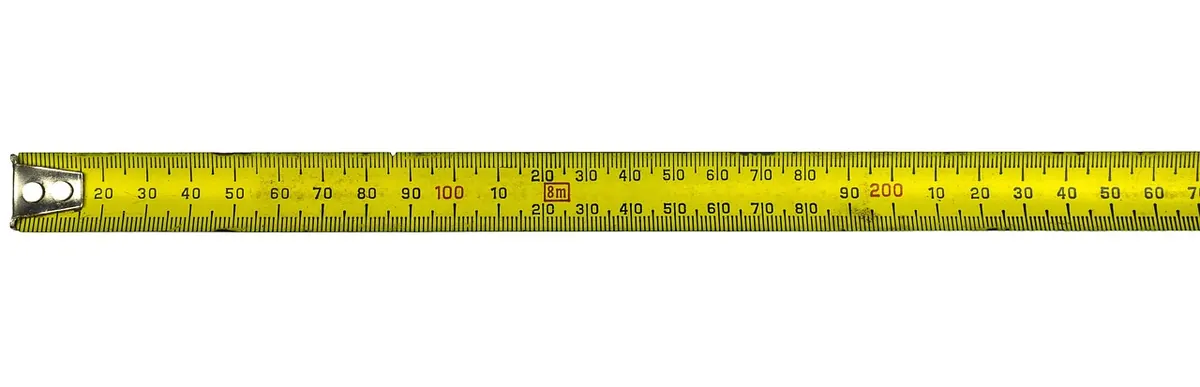
- Using a stiff tape measure. Builder's tapes don't curve around a wrist accurately; use a soft tailor's tape or string.
- Assuming your size is fixed. A snug chain, a heavy beaded bracelet and a rigid bangle in the same "size" will all fit differently. Size the piece, not the person.
Checking the fit when it arrives
Put the bracelet on before you remove any tags and wear it for a few minutes. A chain should sit still on the wrist with a fingertip's worth of movement; a bangle should slide over the hand without force, then turn easily on the wrist without dropping past the knuckles. If a bracelet leaves deep marks, restricts movement, or causes numbness or tingling in your fingers, take it off — that's a sign it's too tight, and it's worth speaking to a pharmacist or GP if symptoms persist. Otherwise, keep your measurements noted in your phone. Once you know your wrist circumference and your preferred ease, every future bracelet is a quick decision rather than a guess.
Photo: Joshua_Willson / Pixabay